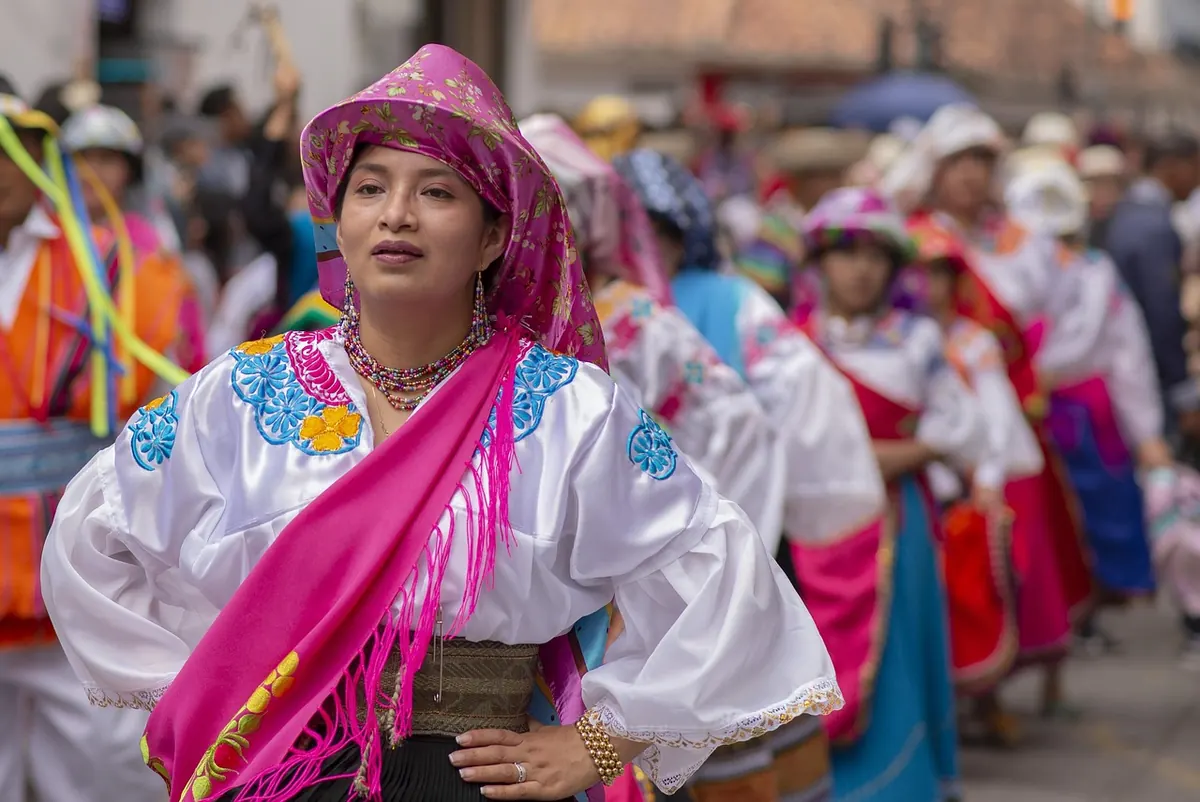
The band turns a corner two streets away and the neighbourhood stops pretending it had other plans. Shutters open, chairs come out onto the pavement, someone's grandmother claims her spot on the church steps. Twenty minutes later the statue appears above a sea of shoulders, swaying slightly, and the square exhales. If you have ever walked into a patron saint festival by accident, that is the moment that usually makes you stay.
It is worth knowing what you are watching. A patron saint festival — festa patronale in Italian — is the annual feast of the saint a town has chosen as its protector. It is a religious observance first, a civic identity second, and a street party third, although the three are so tangled together that locals rarely separate them. The date is fixed by the liturgical calendar, but everything else — the route, the food, the rivalry between quarters — belongs to that specific place.
A Festival Rooted in a Very Old Idea
Christians began gathering at the tombs of martyrs to mark the anniversary of their deaths, and the habit hardened into a calendar. In the Roman world, a patronus was a protector, and cities simply transferred the word to their heavenly advocates. When plague, earthquake, drought or war threatened a community, the response was often a vow: build a chapel, walk the streets with the relic, feed the poor — and repeat it every year if the town survives. Plenty of festivals still carry the language of a promise being kept, centuries after anyone can name the original crisis.
Guilds and lay confraternities took over the organisation in the medieval period, and many of those brotherhoods still exist, still keep their own robes, banners and ledgers. The tradition also travelled. Italian emigrant communities in Argentina, Brazil, the United States and Australia rebuilt the feast abroad, often with a replica statue, and those versions have their own histories now.
How a Procession Actually Works
A procession is not a parade. Nothing in it is choreographed for an audience; the order matters because it encodes rank, devotion and duty. Watch for four elements.
The statue and its carriage
The image of the saint travels on a platform — called a fercolo or vara depending on the region — carried on the shoulders of bearers. In many towns the role is inherited within families, and the bearers train for weeks because the structure is heavy and the route is slow. Some festivals add a mechanic's nightmare: a towering lightweight frame hoisted and carried through narrow streets, as in Viterbo's Macchina di Santa Rosa, or the tall wax columns called candelore shouldered through Catania for Sant'Agata.
The route
It is rarely arbitrary. The procession tends to trace the old parish boundaries, pause at a hospital, a chapel or the house of a long-standing member, and return by a different street so no quarter feels skipped. Ask someone which corner is the best and you will get a passionate, contradictory answer.
The order
Confraternity members in their habits, children dressed in white, a brass band, civic officials with the town's banner, then the saint, then everyone else. The band is not background music; it signals each stage of the route.
The quiet parts
Inside the church, before the procession leaves and when the statue returns, the atmosphere changes completely. That is the religious core, and it deserves the same attention you would give any ceremony.
Food: The Part Nobody Skips
Around the sacred route grows a temporary economy of stalls, and in Italy it is often formally paired with a sagra, a local food festival held on the same days. The logic is simple: the feast day draws the crowd, the crowd needs feeding, and the dishes on offer are the ones that belong to that soil.
- Fried things, always. Zeppole, frittelle, panzerotti, fried dough dusted with sugar — hot oil is the universal language of a festival evening.
- Street food with a postcode. Panelle and crocchè in Palermo, porchetta rolls through Lazio and Umbria, grilled sausage and onions almost everywhere.
- Sweet almonds and torrone. The nut stalls are often the oldest stands on the square, run by the same families for generations.
- Dishes tied to the saint. Cuccìa in Sicily for Santa Lucia, pasta with sardines for San Giuseppe, special breads shaped and stamped for the feast.
Practical rule: eat where the queue is long and local, go early before the best stalls sell out, and carry cash — many small stands still do not take cards. If a family invites you to their table on the pavement, say yes. That is the whole point of the evening.
Etiquette: How to Be a Good Guest
You do not need to be religious to attend, but you do need to read the room. Most of the friction visitors cause comes from treating a sacred event as a photo opportunity.
- Dress for a church, not a beach. Covered shoulders and knees are the safe standard, especially if you plan to step inside.
- Never cross the procession. Step to the side and let it pass. Do not walk between the bearers and the statue, and do not cut across a candelora line to get a better shot.
- Ask before touching. In some towns the faithful reach out to the statue; in others that gesture belongs to the bearers alone. Follow the people around you.
- Keep the camera discreet. No flash during the service, no lens in a praying face, no standing on chairs. If you want a portrait of a stallholder, ask first.
- Accept hospitality gracefully. If you are offered food or a glass, take it. If you must decline, do it with a smile and a thank you.
- Bring small notes. Candles, offerings and stall purchases are cash transactions.
- Mind the fireworks. Evening displays are loud and close. Keep children near, and know where your group will regroup if you get separated in the crowd.
The Same Feast, Different Towns
Do not assume you have seen one, so you have seen them all. In Naples, the September feast of San Gennaro centres on the veneration of the saint's blood in the cathedral, and the square outside fills with a crowd that is attentive in a way television rarely captures. Catania's Sant'Agata in February is a sleepless, immense affair of wax columns and white tunics. Northern towns often keep things more contained: a Mass, a short route, a lunch in the parish hall, a tombola in the evening. Small villages can be the most rewarding, because everyone is involved and nobody is performing for tourists.
If You Go: A Short Practical Checklist
Check the exact dates on the town's own website or parish noticeboard — many festivals shift to the nearest weekend, and the religious date is not always the day of the street events. Arrive two hours before the procession rather than at the advertised start; the crowd builds early and parking disappears. Park outside the centre and walk in. Learn two phrases — quando passa? (when does it pass?) and buona festa — and you will get more help than any guidebook offers.
Stay for the evening, when the stalls are lit and the square is at its best, and leave quietly if the ceremony resumes. Then send a note of thanks to whoever fed you. A patron saint festival is a town showing you what it values; behave like a guest in someone's home and you will be treated like one.